How to protect a mattress with fabric protector
A professional step-by-step guide with the right product for the type of soil, the equipment you need and the safety precautions. Works for: Mattresses (top surface; sides and box base optional).
What you'll need
- Product (by type): Water-based or non-flammable solvent-based fabric protector
- Reference dilution: Ready to use (do not dilute). Always check the label of the product you use.
- Equipment: Sprayer with fan nozzle; microfiber drop cloths; cup for drips; paper towels
- Protection (PPE): Respirator with chemical cartridges and glasses when the product is solvent-based
Step by step
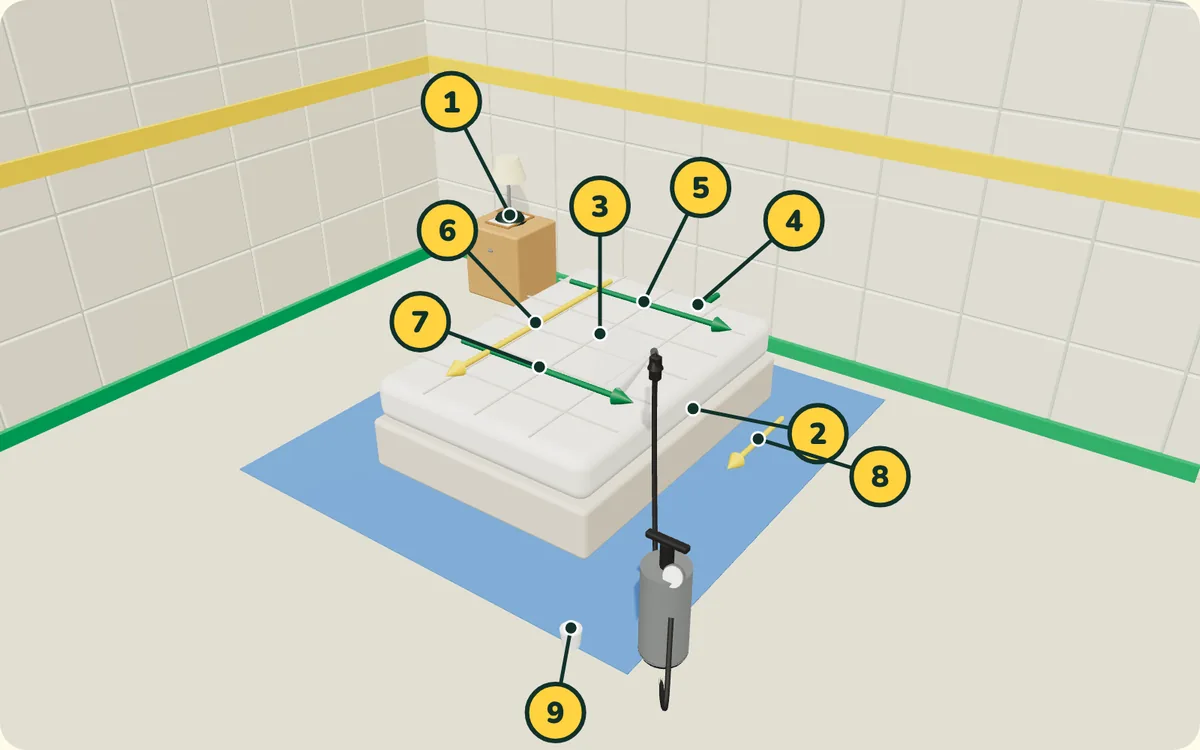
- Before closing the job, explain to the client that on a mattress the protection lasts less (up to about 3 months) because of daily friction with sheets and bodies.
- Agree on whether the sides and the box base will also be treated; in most cases only the top surface is protected.
- Clean and dry the mattress thoroughly first (see: how to prepare upholstery before applying fabric protector).
- Protect the floor and move the mattress away from the wall.
- Apply the first coat horizontally, at 10–15 cm, only dampening.
- Apply the second coat vertically.
- Apply the third coat horizontally, to close the fibers well.
- Work in quadrants, turning the mattress so you always spray the side away from the wall.
- Wait for it to dry and do the repellency test (see: how to do the repellency test and guide the client after fabric protection).
The balance of this job (Sinner's Circle)
Every clean combines chemistry, mechanical action, temperature and time. Here's how much each one counts in this task — learn the method.
Safety tips and common mistakes
Frequently asked questions
What product should I use to protect a mattress with fabric protector?
Water-based or non-flammable solvent-based fabric protector. Reference dilution: Ready to use (do not dilute). Always check the label of the product you use.
How long should the product sit?
A few minutes between coats; test according to the product (10 to 15 min solvent; 12 h water-based).
What protective equipment (PPE) should I wear?
Respirator with chemical cartridges and glasses when the product is solvent-based.
What equipment and supplies do I need?
Sprayer with fan nozzle; microfiber drop cloths; cup for drips; paper towels.
What precautions and common mistakes should I know about?
Don't use a squeegee on mattresses with ridges or quilted seams: it pushes the excess into the grooves and the product soaks into the foam, which weakens the protection. Mattresses with motors or massage already have sealed electrical parts; the protector is extra protection.
What if I don't have everything?
Completely smooth mattress: a squeegee can be used to even out the product, horizontally and then vertically. Client who wants long-lasting protection: also recommend a waterproof mattress protector.
How long does it take to protect a mattress with fabric protector?
30 to 40 min per double mattress.
When should I call a professional?
High-value mattresses or old urine stains (clean first).
Technical content written by MiLimpa based on professional cleaning methods (Upholstery protection video training). Initial version, under technical review. Always follow the label and safety data sheet of the product you use.