How to protect a sofa with water-based fabric protector
A professional step-by-step guide with the right product for the type of soil, the equipment you need and the safety precautions. Works for: Fabric sofas and armchairs.
What you'll need
- Product (by type): Water-based fabric protector
- Reference dilution: Ready to use (do not dilute). Always check the label of the product you use.
- Equipment: Pressurized sprayer with fan nozzle; small stiff brush for the nozzle; small cup for drips; microfiber drop cloths; moisture meter; paper towels
- Protection (PPE): Safety glasses
Step by step
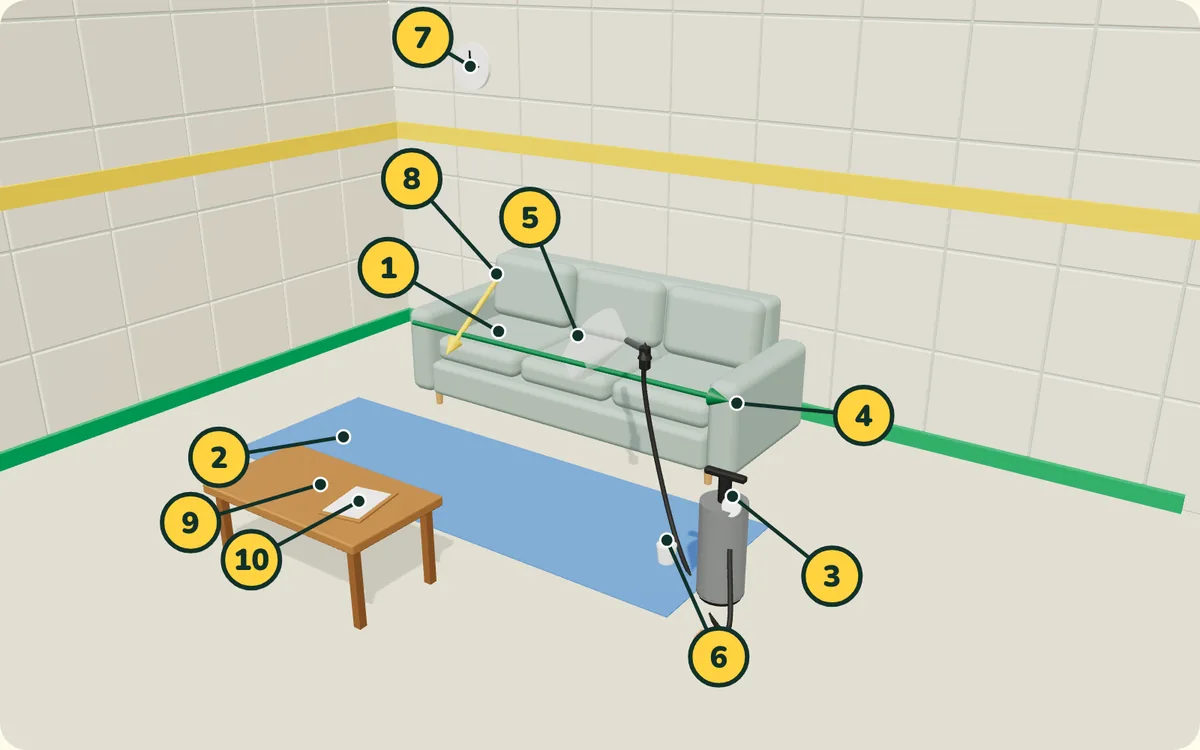
- Start with clean, dry upholstery with the pile brushed.
- Protect the floor and the furniture around it with drop cloths (see: how to protect the room before treating upholstery with fabric protector).
- Clean the nozzle tip with the small brush and pump the sprayer until the relief valve releases.
- Test the fan pattern over the drop cloth and move onto the upholstery already spraying, leaving it still spraying.
- Apply the first coat 10–15 cm from the surface, in continuous passes: front, seat, back and arms, only dampening, never soaking.
- Hold the cup under the nozzle every time you move off the piece, so it doesn't drip.
- Wait 5 to 10 minutes.
- Apply the second coat crosswise (turn the fan and change direction), going over corners again.
- Wipe any drip on floors, wood or glass right away.
- Agree with the client: repellency test after 12 hours and use of the furniture only after 24 hours (see: how to do the repellency test and guide the client after fabric protection).
The balance of this job (Sinner's Circle)
Every clean combines chemistry, mechanical action, temperature and time. Here's how much each one counts in this task — learn the method.
Safety tips and common mistakes
Frequently asked questions
What product should I use to protect a sofa with water-based fabric protector?
Water-based fabric protector. Reference dilution: Ready to use (do not dilute). Always check the label of the product you use.
How long should the product sit?
5 to 10 min between coats; 12 h before testing; 24 h before use.
What protective equipment (PPE) should I wear?
Safety glasses.
What equipment and supplies do I need?
Pressurized sprayer with fan nozzle; small stiff brush for the nozzle; small cup for drips; microfiber drop cloths; moisture meter; paper towels.
What precautions and common mistakes should I know about?
Too much product doesn't improve protection: it stiffens the fibers and marks the fabric. Don't use a squeegee or brush after applying; with a proper sprayer it only spreads the excess. Testing before 12 hours can let liquid soak in and make the client lose confidence.
What if I don't have everything?
Client who needs to use the furniture the same day: apply late in the afternoon so it cures overnight, or consider non-flammable solvent. Sprayer without a gauge: pump until the relief valve releases.
How long does it take to protect a sofa with water-based fabric protector?
30 to 45 min for a 3-seat sofa.
When should I call a professional?
Delicate fabrics, high-value furniture or when the client needs a written warranty.
Technical content written by MiLimpa based on professional cleaning methods (Upholstery protection video training). Initial version, under technical review. Always follow the label and safety data sheet of the product you use.