How to do the repellency test and guide the client after fabric protection
A professional step-by-step guide with the right product for the type of soil, the equipment you need and the safety precautions. Works for: Protected upholstery.
What you'll need
- Product (by type): None (just water and everyday drinks)
- Reference dilution: —. Always check the label of the product you use.
- Equipment: Glass or bottle of water; paper towels or microfiber cloth; moisture meter
- Protection (PPE): —
Step by step
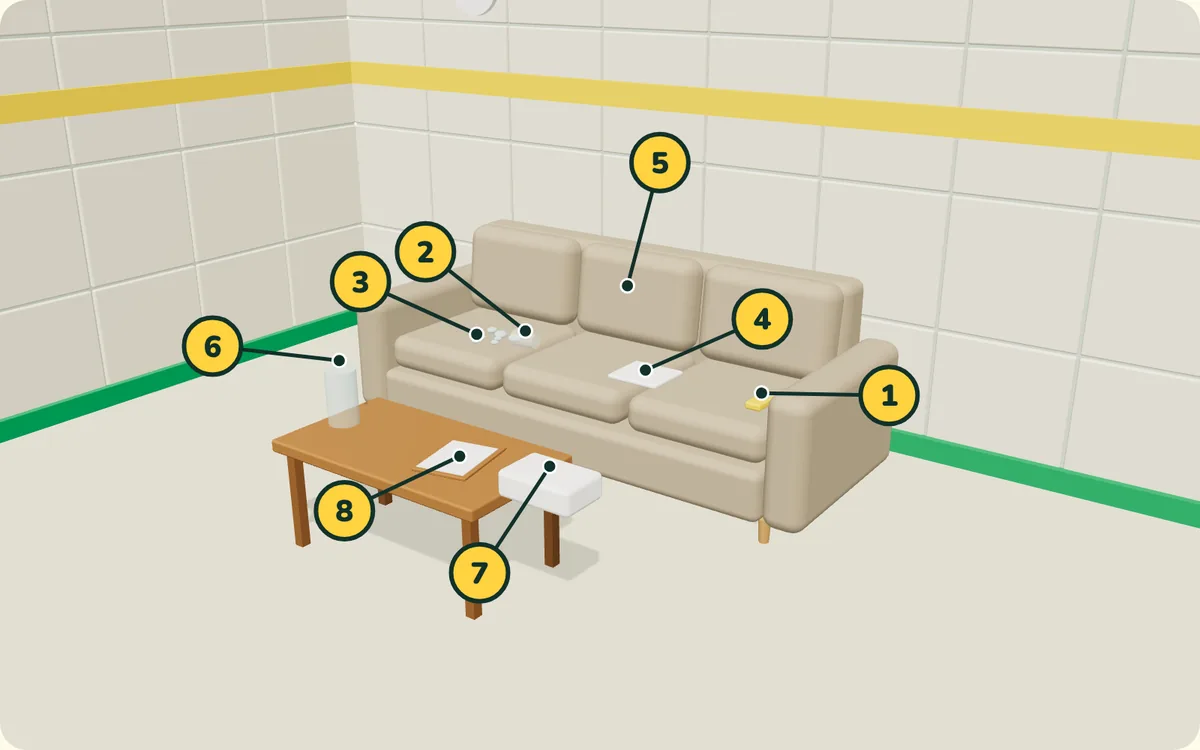
- Wait the right time: 10 to 15 minutes with solvent and at least 12 hours with water-based products (a moisture meter reading near zero shows it is dry).
- Simulate a real accident: tip a glass of water from a low height onto the seat, without throwing it hard.
- Show the client that the liquid beads up and runs off.
- To remove it, touch the paper towel or microfiber to the liquid and let it soak it up, without pressing or rubbing.
- On fabrics with pile (suede, faux suede, chenille), explain that the pile may look damp but the weave underneath is protected; wipe gently.
- Repeat the test with the client doing it, so they learn the move.
- Agree on care: remove spills right away, don't rub, don't use harsh cleaners and reapply the protection over time.
- Set a conservative warranty period (usually 3 to 6 months on upholstery and up to 3 months on mattresses).
The balance of this job (Sinner's Circle)
Every clean combines chemistry, mechanical action, temperature and time. Here's how much each one counts in this task — learn the method.
Safety tips and common mistakes
Frequently asked questions
What product should I use to do the repellency test and guide the client after fabric protection?
None (just water and everyday drinks). Reference dilution: —. Always check the label of the product you use.
How long should the product sit?
10 to 15 min after solvent; 12 h after water-based.
What protective equipment (PPE) should I wear?
—.
What equipment and supplies do I need?
Glass or bottle of water; paper towels or microfiber cloth; moisture meter.
What precautions and common mistakes should I know about?
Fabric protection handles everyday accidents, not liquid thrown hard or left for hours. Testing before it cures (especially water-based) can let the liquid soak in and cause distrust. Promising 12 months in heavy use usually leads to rework.
What if I don't have everything?
Client who can't wait for the water-based cure: teach them to do the test the next day and agree to payment after the result, or come back to run the test.
How long does it take to do the repellency test and guide the client after fabric protection?
10 min.
When should I call a professional?
When the test shows the liquid soaking in after the curing time (reapplication).
Technical content written by MiLimpa based on professional cleaning methods (Upholstery protection video training). Initial version, under technical review. Always follow the label and safety data sheet of the product you use.