How to protect a sofa with non-flammable solvent fabric protector
A professional step-by-step guide with the right product for the type of soil, the equipment you need and the safety precautions. Works for: Fabric sofas, armchairs and chairs.
What you'll need
- Product (by type): Non-flammable solvent-based fabric protector
- Reference dilution: Ready to use (do not dilute); about 1 liter for a 3-seat sofa in two coats. Always check the label of the product you use.
- Equipment: Stainless steel sprayer with pressure gauge and fan nozzle; small cup for drips; damp cotton cloth; microfiber drop cloths; wide masking tape; fan; moisture meter
- Protection (PPE): Respirator with two chemical cartridges (organic vapors and acid gases); safety glasses
Step by step
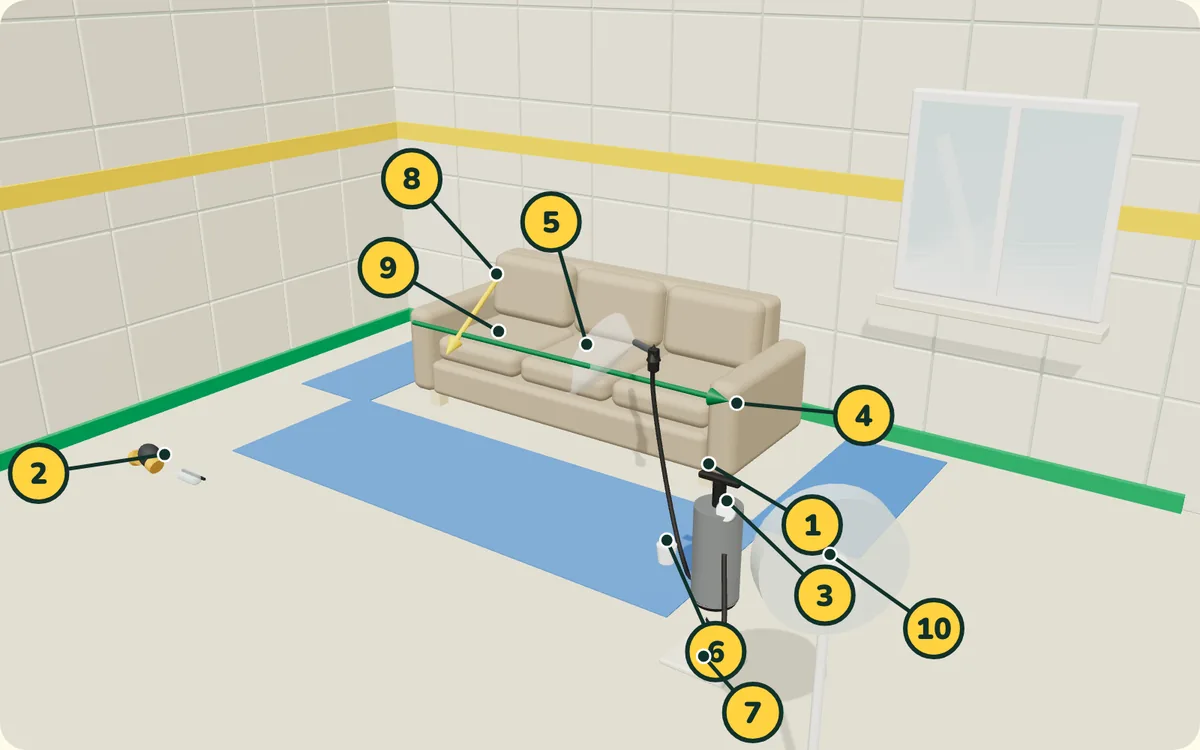
- Protect the whole room and mask the wood, plastic and metal parts of the piece with tape (see: how to protect the room before treating upholstery with fabric protector).
- Get people and pets out of the room, open the windows and put on respirator and glasses (see: pPE and safety when applying fabric protector to upholstery).
- Pump the sprayer to 40 psi on the gauge; work between 40 and 30 psi and pump again when it drops below 30.
- Start spraying into the cup and then bring the fan onto the upholstery.
- First coat at 10–15 cm, in continuous passes, only dampening the surface (the fabric darkens just a little).
- Never point the nozzle at walls, doors, glass or floors; when moving off the piece, hold the cup under the nozzle.
- Wait about 5 minutes.
- Apply the second coat crosswise, changing the direction of the fan and going over corners again.
- Wait 10 to 15 minutes and do the repellency test (see: how to do the repellency test and guide the client after fabric protection).
- Keep the room ventilated until the odor is gone.
The balance of this job (Sinner's Circle)
Every clean combines chemistry, mechanical action, temperature and time. Here's how much each one counts in this task — learn the method.
Safety tips and common mistakes
Frequently asked questions
What product should I use to protect a sofa with non-flammable solvent fabric protector?
Non-flammable solvent-based fabric protector. Reference dilution: Ready to use (do not dilute); about 1 liter for a 3-seat sofa in two coats. Always check the label of the product you use.
How long should the product sit?
5 min between coats; 10 to 15 min for a simple test; 30 min for a tougher test.
What protective equipment (PPE) should I wear?
Respirator with two chemical cartridges (organic vapors and acid gases); safety glasses.
What equipment and supplies do I need?
Stainless steel sprayer with pressure gauge and fan nozzle; small cup for drips; damp cotton cloth; microfiber drop cloths; wide masking tape; fan; moisture meter.
What precautions and common mistakes should I know about?
Low pressure makes the nozzle drip large drops that stain; too much pressure turns into a mist that is lost in the air and marks the surroundings. Soaking lets the product reach seams and glue and bring factory pen and glue marks to the surface, which is common on new furniture. A whitish, cold film right after spraying is the solvent evaporating and disappears within minutes.
What if I don't have everything?
Furniture with lots of wood that can't be masked: use a water-based product or move the piece outdoors. Sprayer without a gauge: don't use solvent; use water-based.
How long does it take to protect a sofa with non-flammable solvent fabric protector?
40 to 60 min for a 3-seat sofa, including room protection.
When should I call a professional?
Whenever there is no sprayer with a gauge, no respirator with chemical cartridges or no way to protect the room.
Technical content written by MiLimpa based on professional cleaning methods (Upholstery protection video training). Initial version, under technical review. Always follow the label and safety data sheet of the product you use.