How to sanitize a fish counter
A professional step-by-step guide with the right product for the type of soil, the equipment you need and the safety precautions. Works for: Washable ceiling, walls, tables and boards, counters, sinks, bins and floor.
What you'll need
- Product (by type): Chlorinated alkaline disinfectant detergent (foam application); Alkaline disinfectant degreaser with quaternary ammonium; Hydrogen-peroxide disinfectant multi-purpose cleaner; Mildly alkaline high-foam degreasing detergent (safe for soft metals); Concentrated neutral degreasing detergent; Chlorinated disinfectant for food-contact surfaces; Peracetic acid disinfectant; Quaternary ammonium disinfectant; Drain odor neutralizer
- Reference dilution: Chlorinated alkaline disinfectant detergent: pH 12–14; disinfection up to 1:50; degreasing up to 1:100; Alkaline disinfectant degreaser with quaternary ammonium: pH 12–14; light soil 1:100, medium 1:40, disinfection up to 1:20; Hydrogen-peroxide disinfectant multi-purpose cleaner: pH 2.2–3.5; general cleaning up to 1:200; disinfection up to 1:50; Mildly alkaline high-foam degreasing detergent: pH 10–11.4; up to 1:50; Concentrated neutral degreasing detergent: pH 6–8; up to 1:400; Chlorinated disinfectant for food-contact surfaces: pH 12–14; up to 1:400; Peracetic acid disinfectant: pH 0–2; per the label; Quaternary ammonium disinfectant: pH 8.5–10.5; up to 1:10; Drain odor neutralizer: 50 to 150 mL per drain. Always check the label of the product you use.
- Equipment: Foam generator or dilution dispenser; wall, floor, grout and hand brushes; non-abrasive and general-purpose pads; holder with extension pole; microfiber mop or cloth; squeegee; counter squeegee; dustpan; soaking containers; measuring container; disposable cloth
- Protection (PPE): Waterproof PVC apron; rubber chemical gloves; safety goggles; waterproof safety boots; hair net; uniform
Step by step
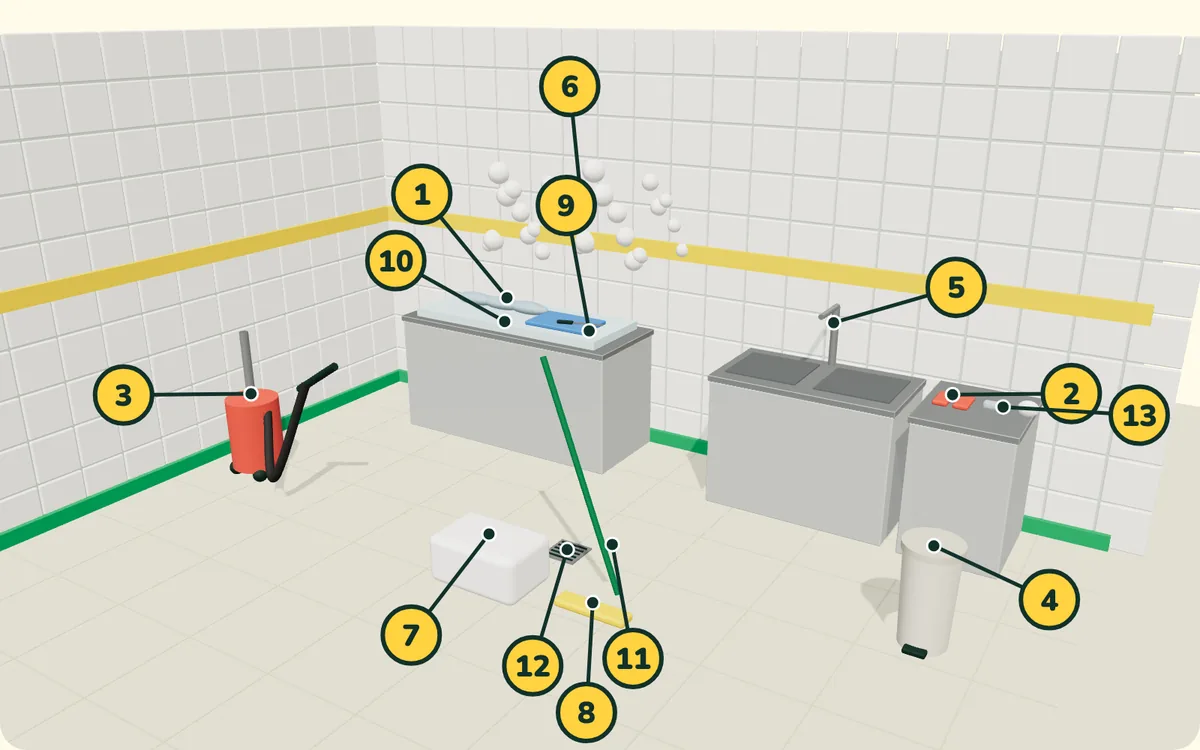
- Remove the fish and store or discard it as the person in charge directs.
- Wash your hands, put on PPE and gather materials and products.
- Mix the solutions at the label dilution.
- Remove solid waste from tables, boards, counters and floor; take the trash out.
- Pre-rinse with clean water, top to bottom.
- Apply the product as foam and scrub ceiling, walls and counters (see: how to foam-clean ceilings, walls and counters).
- Soak knives and utensils and scrub them afterwards (see: how to sanitize machines that come apart, knives and utensils).
- Wash the floor with a brush and squeegee (see: how to wash a food prep area floor).
- Rinse everything top to bottom.
- If you washed with detergent only, disinfect the surfaces (see: how to disinfect surfaces after washing with detergent).
- Dry the ceiling with a microfiber mop, counters with a counter squeegee and the floor with a squeegee.
- Treat the drains (see: how to treat floor drains, traps and grease traps).
- Clean and store materials and PPE (see: how to clean and store cleaning equipment after use).
The balance of this job (Sinner's Circle)
Every clean combines chemistry, mechanical action, temperature and time. Here's how much each one counts in this task — learn the method.
Safety tips and common mistakes
Frequently asked questions
What product should I use to sanitize a fish counter?
Chlorinated alkaline disinfectant detergent (foam application); Alkaline disinfectant degreaser with quaternary ammonium; Hydrogen-peroxide disinfectant multi-purpose cleaner; Mildly alkaline high-foam degreasing detergent (safe for soft metals); Concentrated neutral degreasing detergent; Chlorinated disinfectant for food-contact surfaces; Peracetic acid disinfectant; Quaternary ammonium disinfectant; Drain odor neutralizer. Reference dilution: Chlorinated alkaline disinfectant detergent: pH 12–14; disinfection up to 1:50; degreasing up to 1:100; Alkaline disinfectant degreaser with quaternary ammonium: pH 12–14; light soil 1:100, medium 1:40, disinfection up to 1:20; Hydrogen-peroxide disinfectant multi-purpose cleaner: pH 2.2–3.5; general cleaning up to 1:200; disinfection up to 1:50; Mildly alkaline high-foam degreasing detergent: pH 10–11.4; up to 1:50; Concentrated neutral degreasing detergent: pH 6–8; up to 1:400; Chlorinated disinfectant for food-contact surfaces: pH 12–14; up to 1:400; Peracetic acid disinfectant: pH 0–2; per the label; Quaternary ammonium disinfectant: pH 8.5–10.5; up to 1:10; Drain odor neutralizer: 50 to 150 mL per drain. Always check the label of the product you use.
How long should the product sit?
10 minutes of product dwell time.
What protective equipment (PPE) should I wear?
Waterproof PVC apron; rubber chemical gloves; safety goggles; waterproof safety boots; hair net; uniform.
What equipment and supplies do I need?
Foam generator or dilution dispenser; wall, floor, grout and hand brushes; non-abrasive and general-purpose pads; holder with extension pole; microfiber mop or cloth; squeegee; counter squeegee; dustpan; soaking containers; measuring container; disposable cloth.
What precautions and common mistakes should I know about?
Never use chlorine products together with peracetic acid or other acids. Always rinse off the disinfectant when the label says so.
What if I don't have everything?
No disinfectant degreaser: wash with detergent, rinse and disinfect separately for 10 minutes. Lingering odor: treat the drains at the end instead of raising the disinfectant dose.
How long does it take to sanitize a fish counter?
45 to 75 min per fish counter up to 15 m².
When should I call a professional?
Lingering odor even after the routine, or a heavy reopening clean.
Technical content written by MiLimpa based on professional cleaning methods (Supermarket cleaning video training). Initial version, under technical review. Always follow the label and safety data sheet of the product you use.