High-touch points: what to clean most often
A professional step-by-step guide with the right product for the type of soil, the equipment you need and the safety precautions. Works for: Door handles, switches, handrails, buttons, faucets, flush valves, keyboards, phones.
Quick answer: To high-touch points: what to clean most often, use 70% alcohol or disinfectant (on the cloth); main steps: list the touch points in each area (doors, switches, handrails, elevator buttons, faucets, flush valves, grab bars, dispensers, keyboards, phones, drawer and blind pulls); set the frequency: in high-traffic places, at least 3 times a day (routine cleaning during operation); dampen the cloth with the product — never spray electronics or switches; wipe in one direction and let air-dry.
AreaAny shared space
ContaminationHigh
Dwell timeContact time on the label
What you'll need
- Product (by type): 70% alcohol or disinfectant (on the cloth)
- Reference dilution: Per the label. Always check the label of the product you use.
- Equipment: Microfiber cloths, spray bottle
- Protection (PPE): Gloves
Step by step
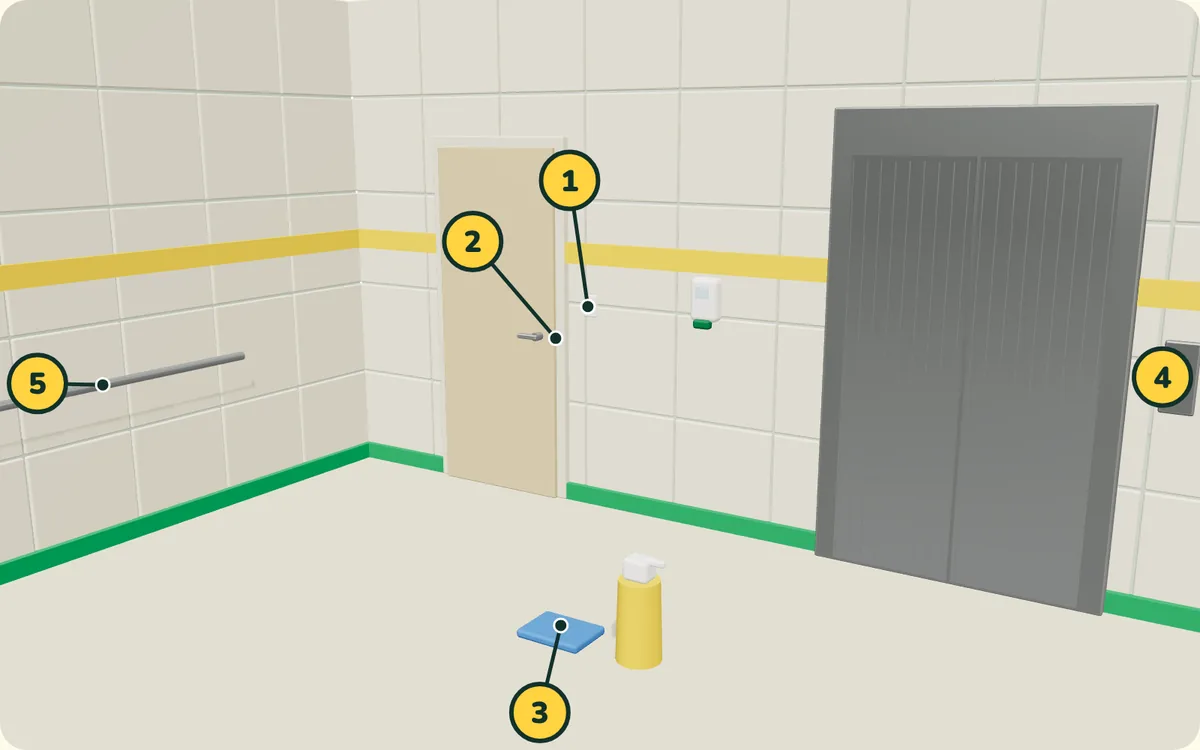
- List the touch points in each area (doors, switches, handrails, elevator buttons, faucets, flush valves, grab bars, dispensers, keyboards, phones, drawer and blind pulls).
- Set the frequency: in high-traffic places, at least 3 times a day (routine cleaning during operation).
- Dampen the cloth with the product — never spray electronics or switches.
- Wipe in one direction and let air-dry.
- In a business, log the time on a control sheet.
Why it works: Routine in-use cleaning; one direction. See the method.
Safety tips and common mistakes
Keeping doors open when possible reduces handle contact.
Frequently asked questions
What product should I use to high-touch points: what to clean most often?
70% alcohol or disinfectant (on the cloth). Reference dilution: Per the label. Always check the label of the product you use.
How long should the product sit?
Contact time on the label.
What protective equipment (PPE) should I wear?
Gloves.
What equipment and supplies do I need?
Microfiber cloths, spray bottle.
What precautions and common mistakes should I know about?
Keeping doors open when possible reduces handle contact.
Technical content written by MiLimpa based on professional cleaning methods (School cleaning manual; Higher-education cleaning training). Initial version, under technical review. Always follow the label and safety data sheet of the product you use.